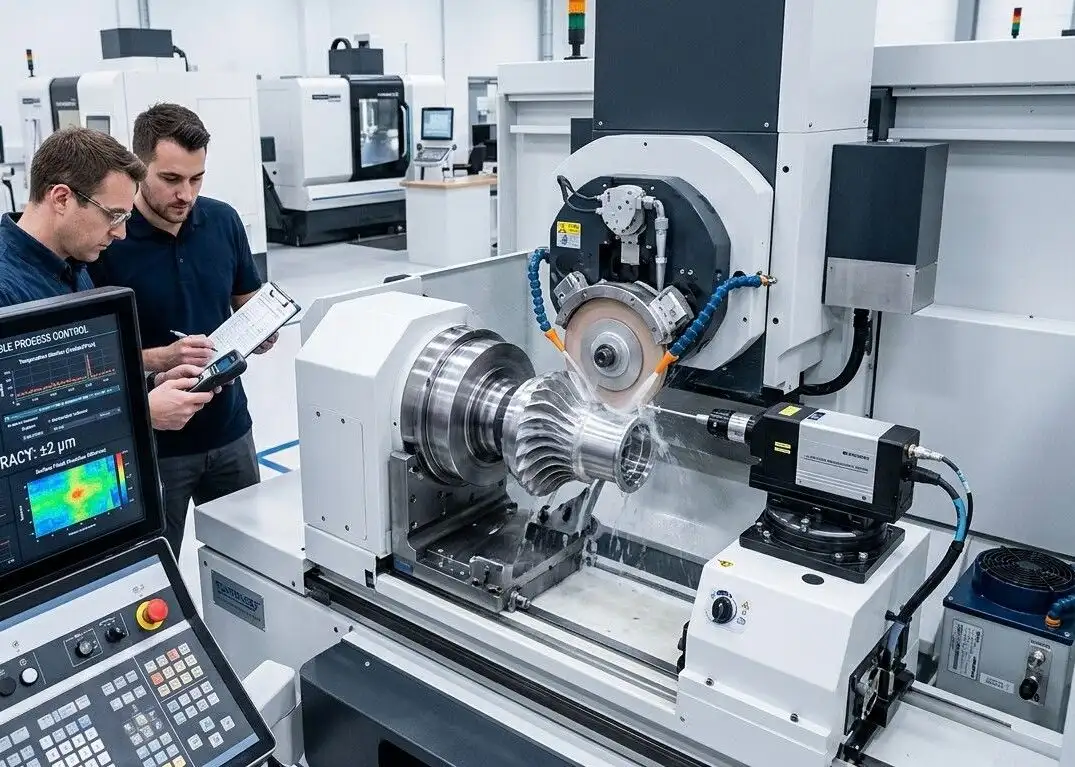
High-Precision Grinding Process Control for Reducing Scrap
High-precision grinding is widely used in industries requiring micron-level accuracy, including aerospace, automotive manufacturing, additive manufacturing, and metallurgical research. Achieving consistent results requires more than advanced machines or quality abrasives. Effective high-precision grinding process control is essential for maintaining dimensional accuracy, reducing scrap, and sustaining production efficiency.
Many grinding issues originate from inconsistent process control rather than equipment limitations. When variables such as wheel condition, heat generation, or feed rates drift outside stable ranges, even minor deviations can lead to rejected parts or costly rework.
For engineers and technicians evaluating how to reduce scrap in precision grinding operations, the solution lies in disciplined monitoring of grinding parameters, stable machine conditions, and well-maintained abrasive systems.
This guide outlines practical grinding process control strategies that help maintain stable processes and achieve reliable results in both grinding and polishing operations.
Why Rework and Scrap Occur in Precision Grinding
The Cost of Scrap in Precision Manufacturing
Scrap and rework introduce multiple operational challenges, including material waste, production delays, and additional inspection requirements. In high-precision environments where tolerances are measured in microns, even small process variations can quickly produce out-of-spec components.
Reducing scrap is therefore not only a quality objective but also a critical factor in maintaining production efficiency and cost control.
Industries Most Affected by Grinding Variability
Grinding accuracy is essential in industries where dimensional precision directly affects performance and reliability. Aerospace components, automotive drivetrain systems, industrial tooling, and additive manufacturing parts all require stable grinding processes.
Metallurgical laboratories also rely on controlled grinding conditions for sample preparation. In these applications, surface grinding tolerance control directly affects the reliability of microstructural analysis.
Common Causes of Scrap in Precision Grinding
Several factors consistently contribute to scrap generation:
- Dimensional overshoot during finishing passes
- Thermal distortion from excessive heat
- Grinding wheel wear or glazing
- Machine vibration or unstable fixturing
- Incorrect abrasive or wheel selection
Identifying these causes is the first step toward improving precision grinding process control.
High-Precision Grinding Process Control
High-precision grinding process control involves monitoring and adjusting grinding parameters to maintain consistent dimensional accuracy and surface quality. Stable control of operating conditions allows manufacturers to achieve repeatable results while minimizing rework.
Grinding is particularly suitable for tight-tolerance applications because material removal occurs through thousands of abrasive grains rather than a single cutting edge. Each grain removes a small amount of material, distributing cutting forces across the wheel and allowing extremely fine dimensional adjustments.
Compared with conventional machining processes, grinding provides greater control during final finishing stages and typically produces improved surface quality and dimensional stability.
Key Grinding Process Variables That Affect Accuracy
Controlling grinding variables is central to grinding process optimization. Even small parameter changes can influence surface finish, dimensional stability, and heat generation.
Feed Rate and Depth of Cut
Feed rate and depth of cut determine the amount of material removed in each pass. Excessive removal rates increase mechanical stress and can cause dimensional overshoot. Gradual stock removal improves stability and allows operators to approach final tolerances more precisely.
Grinding Wheel Speed and Workpiece Speed
Wheel speed and workpiece speed influence both cutting efficiency and thermal behavior. Proper balance between these speeds helps maintain stable cutting conditions while limiting heat generation in the grinding zone.
Grinding Pressure and Contact Stability
Grinding pressure controls how abrasive grains interact with the workpiece surface. Stable pressure promotes controlled micro-fracturing of abrasive grains, allowing fresh cutting edges to develop and maintain consistent material removal.
Workholding and Fixture Stability
Reliable grinding results also depend on rigid workholding systems. Magnetic chucks and precision mechanical fixtures are commonly used to maintain alignment during the grinding cycle. Stable fixturing minimizes vibration and supports predictable grinding behavior.
Grinding Wheel Selection and Maintenance
Selecting the correct grinding wheel is fundamental to maintaining process stability.
Abrasive Grain Size
Abrasive grain size directly influences removal rate and surface finish. Coarser grains remove material more aggressively but may leave deeper scratches, while finer grains produce smoother finishes at slower removal rates.
Matching grain size to the application helps balance productivity and finish quality.
Bond Type and Material Compatibility
Bond type determines how strongly abrasive grains are held within the grinding wheel. A common guideline is to pair harder workpiece materials with softer bond wheels so worn grains release easily and expose fresh cutting edges.
Softer materials generally perform better with harder bond wheels that retain abrasives longer.
Indicators of Wheel Performance Problems
Grinding wheel condition gradually changes during production. Signs that the wheel may be causing scrap include glazing, loading, burn marks on the surface, or inconsistent finish quality. Addressing these issues early helps prevent dimensional errors.
Grinding Wheel Dressing Strategies
The grinding wheel dressing process restores wheel geometry and exposes fresh abrasive grains. Without regular dressing, grinding wheels gradually lose cutting efficiency and produce inconsistent results.
Dressing improves chip clearance and ensures the wheel maintains proper contact conditions with the workpiece. Many operations dress the wheel after heavy rough grinding, before finishing passes, or when surface finish begins to deteriorate.
Common dressing tools include diamond dressers, rotary dressing systems, and automated CNC dressing units.
Grinding Heat Management and Thermal Stability
Heat generation is one of the most common causes of dimensional error in precision grinding. When temperatures rise in the grinding zone, temporary workpiece expansion can affect measurement accuracy. Excessive heat may also produce surface burns or microstructural damage.
Effective grinding heat management relies on stable grinding parameters and proper coolant delivery. Flood coolant systems are widely used to control temperature and improve surface quality, while minimum-quantity lubrication systems may be used in some applications.
Maintaining light finishing passes and consistent feed rates helps prevent thermal distortion during precision grinding operations.
Process Control Strategies to Reduce Scrap
Successful grinding operations rely on structured processes rather than reactive adjustments.
Many manufacturers use a staged grinding sequence that begins with rough grinding and gradually transitions to semi-finishing and light finishing passes. This approach allows operators to approach final dimensions with greater control.
Spark-out or washout passes are often performed before measurement. These passes remove minimal material but stabilize the surface and improve dimensional repeatability.
Temperature stabilization also plays an important role. Allowing components to cool before inspection helps prevent thermal expansion from influencing measurement results. Machine condition is equally important, and stable spindle performance, balanced wheels, and a rigid machine foundation all support consistent grinding results.
Measurement and Precision Grinding Quality Control
Accurate inspection ensures that grinding operations maintain tight tolerances. Micrometers, air gauges, and coordinate measuring machines (CMMs) are commonly used for dimensional verification.
In high-precision assembly applications, parts may be grouped by micron-level size ranges and matched during assembly to maintain overall system tolerances.
Statistical process control (SPC) further improves stability by tracking process capability metrics such as Cp and Cpk. Monitoring these indicators helps engineers detect process drift before it produces scrap.
Integrating Grinding and Polishing
Grinding is typically the first stage of metallographic sample preparation. During this stage, grinding removes deformation layers created during cutting and prepares the surface for polishing.
Errors introduced during grinding can affect the entire preparation process. Deep scratches, embedded abrasives, or uneven surfaces may obscure microstructural features during analysis.
Consistent results require a controlled sequence of progressively finer abrasives and polishing media.
Data-Driven Grinding Process Optimization
Modern grinding systems increasingly rely on digital monitoring to maintain stable operating conditions. Sensors can track parameters such as spindle speed, vibration levels, and grinding forces.
Predictive maintenance systems use this data to identify equipment issues before they affect production quality. Production analytics also allow engineers to identify long-term process trends and refine grinding parameters to reduce scrap.
Practical Tips for Improving Grinding Consistency
Several operational practices consistently improve grinding stability:
- Maintain stable grinding parameters
- Select abrasives appropriate for the material
- Dress grinding wheels regularly
- Control heat through proper coolant delivery
- Verify dimensions during finishing stages
- Allow components to stabilize before measuremen
Applying these practices helps maintain consistent dimensional accuracy across production runs.
Frequently Asked Questions
How can scrap be reduced in precision grinding operations?
Maintaining stable grinding parameters, proper wheel dressing, and effective heat management significantly reduces scrap and improves dimensional consistency.
Which grinding variables most affect part accuracy?
Feed rate, wheel speed, grinding pressure, coolant delivery, and wheel condition are the primary variables influencing grinding accuracy.
How can dimensional errors be prevented in surface grinding?
Stable fixturing, controlled finishing passes, and consistent measurement practices help prevent dimensional drift.
What is the purpose of grinding wheel dressing?
Dressing restores wheel geometry, exposes fresh abrasive grains, and improves chip clearance, ensuring consistent grinding performance.
How does heat affect grinding accuracy?
Excessive heat can cause thermal expansion, surface burns, and microstructural damage, all of which can lead to dimensional errors.
How can manufacturers improve grinding and polishing consistency?
Stable machine conditions, controlled abrasive progression, and disciplined process control practices significantly improve repeatability.
Building High-Precision Grinding Process
Reliable grinding performance depends on disciplined high-precision grinding process control rather than trial-and-error adjustments. Stable parameters, proper wheel management, effective heat control, and accurate measurement practices help maintain consistent dimensional results.
When these elements are managed systematically, manufacturers can reduce scrap and maintain efficient grinding and polishing workflows.
For laboratories and manufacturing teams working to improve grinding and metallographic preparation processes, PSI Dragon offers metallurgical equipment, micro-abrasive sheets, and preparation materials designed to support consistent and reliable results.